Youth in Dialogue with the World, Building a Shared Global Future
On 2 July 2026, the “Switzerland–Geneva Exchange Seminar” was successfully held at the University of Geneva, co-organised by the Chinese Scholars Association of the University of Geneva, the Tsinghua University School of Economics and Management (SEM) Switzerland Practice Team, and the Geneva Chinese Students and Scholars Association. Xuebing Bai, Secretary-General of the Global Youth Governance Association (GYGA), was invited to attend and engage in in-depth discussions with Tsinghua SEM faculty and students on topics including UN international organisations, global governance, international talent development, and youth career pathways.
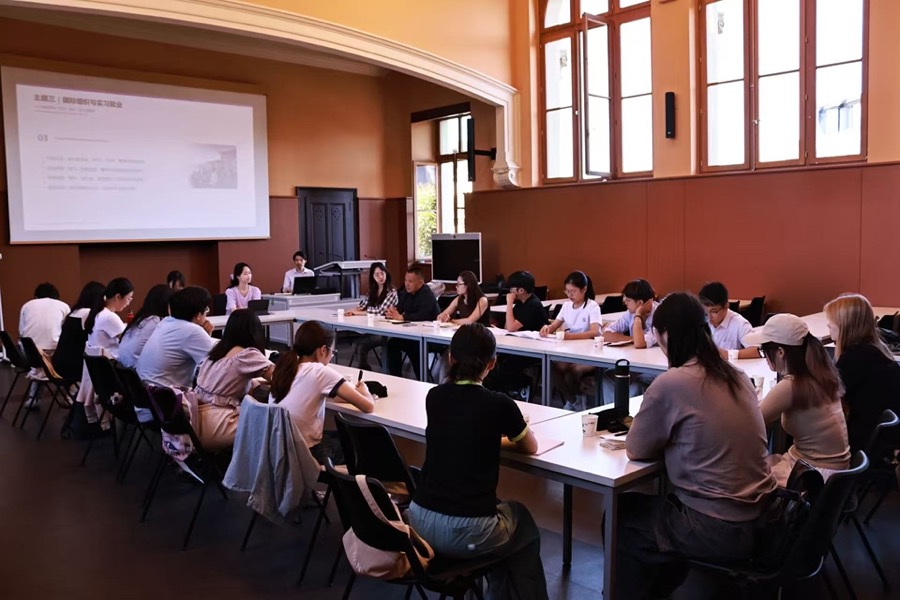
Background
Opening the seminar, Xuebing Bai expressed sincere gratitude to the Chinese Scholars Association of the University of Geneva for its long-standing commitment to serving Chinese students and scholars, and for building bridges between Chinese and Swiss universities. He expressed his honour at the opportunity to speak directly with Tsinghua students, hoping to offer practical insight into international organisations and global governance based on his own professional experience.
Geneva: A Living Platform for Global Governance
Xuebing Bai introduced Geneva’s pivotal role as the world’s multilateral diplomacy hub. He noted that Geneva is home not only to the United Nations Office at Geneva (UNOG), but also to the headquarters of the World Health Organization (WHO), the World Intellectual Property Organization (WIPO), the International Labour Organization (ILO), the International Telecommunication Union (ITU), and the World Trade Organization (WTO) — making it the foremost city for global governance practice, international rulemaking, and multilateral cooperation.
International Organisations and Opportunities for Chinese Youth
Drawing on years of experience within the UN system in Geneva, Xuebing Bai outlined how international organisations function, what the daily work of international civil servants looks like, and how cross-cultural collaboration operates within multilateral institutions.
On the prospects for Chinese youth entering UN organisations, he noted that as China’s overall strength has grown, the number of Chinese nationals working in the UN system has steadily increased — with growing competitiveness in fields such as public health, science and technology, intellectual property, digital economy, sustainable development, and artificial intelligence. He also pointed out that, relative to the scale of the UN system, Chinese nationals in certain technical and senior management roles still have significant room to grow.
Pathways into International Organisations
Xuebing Bai outlined the main pathways for Chinese youth to engage with UN organisations, including the UN Volunteers (UNV) programme, internship programmes, the Young Professionals Programme (YPP), youth representative initiatives, and UN-hosted conferences, youth forums, and global training programmes. Drawing on years of experience organising Chinese university students for exchanges, internships, and study tours in Geneva, he walked participants through application processes, role characteristics, required competencies, and preparation strategies.
Four Recommendations for Aspiring International Civil Servants
On the question of how to improve one’s chances of entering an international organisation, Xuebing Bai offered four pieces of advice:
First, build substantive expertise. International organisations recruit for competence, not academic titles. Whether one’s background is in economics, management, law, public policy, AI, or life sciences, deep professional expertise opens doors.
Second, strengthen language skills. English remains the primary working language of the UN system; fluency in French, Spanish, Arabic, or other UN official languages provides a significant competitive advantage.
Third, develop a global governance mindset. International organisations increasingly value cross-cultural collaboration, teamwork, and the ability to analyse global public affairs. Students should actively engage in international conferences, Model UN simulations, exchange programmes, and cross-cultural experiences.
Fourth, plan your career early. Building an international profile is a long-term process. From the undergraduate years onward, students should pursue research projects, international competitions, social practice, overseas exchanges, and volunteering, steadily accumulating the experience that strengthens an international application.
Discussion and Closing Remarks
The interactive session generated enthusiastic discussion, with faculty and students asking about UN recruitment standards, career paths across different UN agencies, professional development as an international civil servant, and talent cultivation in the age of AI. Participants said they gained a clearer, more systematic understanding of career opportunities in international organisations.
In his closing remarks, Xuebing Bai encouraged Tsinghua SEM students to leverage their professional strengths, stay informed about UN and international organisation vacancies, internships, volunteer programmes, and youth initiatives — and to apply boldly. He expressed his hope that they would bring the expertise and sense of responsibility of China’s new generation to the international stage, contributing to the building of a community with a shared future for humanity.
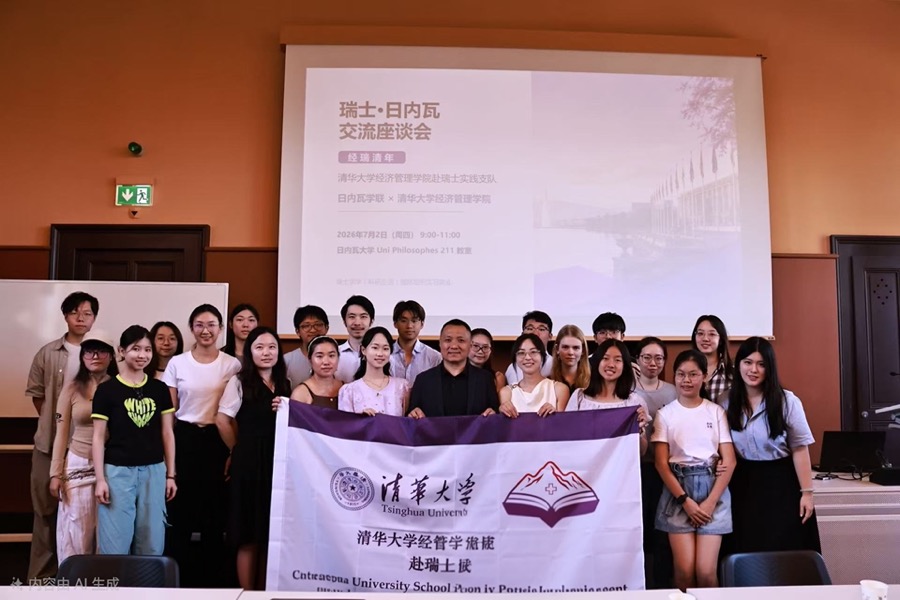
GYGA will continue to uphold its mission of “Youth Empowerment, Global Governance” — strengthening collaboration with UN organisations, universities at home and abroad, youth bodies, and international partners, and actively advancing international talent development, youth exchange, and global governance capacity building for the next generation.